







Start Fresh: A New Year Without the Dieting Trap
Dec 31, 2024
- 5-8 min read
As the new year draws near, many people set resolutions in hopes of a fresh start. In fact, according to 2024 statistics, 79% of resolutions focus on improving health, with 32% specifically targeting diet. While striving for self-improvement is commendable, many New Year’s diets often rely on unrealistic and unhealthy weight loss methods. Additionally, the pressure to lose weight may come from various sources, including family, friends and social media, further intensifying the challenge.
If you’ve set diet resolutions only to struggle with maintaining them, you’re not alone. Research reveals that 97% of dieters regain the weight they’ve lost within three years. This often traps individuals in a cycle of fluctuating eating habits, leading to frustration and setbacks.
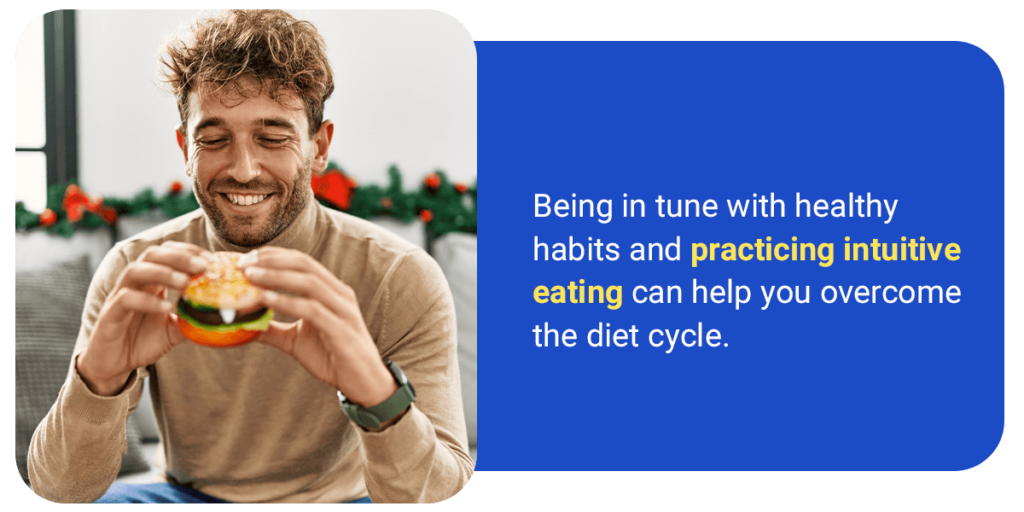
Fortunately, you can break free from this pattern by making a New Year’s resolution that doesn’t involve dieting. Discover how to escape the diet cycle for good by embracing intuitive eating and adopting healthy, sustainable habits that support long-term well-being.
What Is the Diet Cycle?
The diet cycle is exactly what it sounds like: a never-ending loop of dieting, giving up, overeating, regaining weight and dieting again. Diets are typically restrictive, demanding constant effort to reduce food intake. This all-or-nothing approach often clashes with real-life lifestyles and makes long-term success difficult. The rigidity of dieting can trigger overeating, causing you to regain any weight you’ve lost. In the end, this cycle leads to both physical and emotional setbacks, leaving you feeling frustrated and defeated.
Diets don’t work in the long run because our bodies aren’t designed to sustain prolonged food restrictions. The more we try to cut out certain foods, the stronger our craving for them becomes — a psychological phenomenon known as ironic processing. This explains why so many people find it difficult to stick to a New Year’s diet, as the constant focus on restriction often intensifies the desire for the very foods we’re trying to avoid.
The Adverse Effects of Diet Cycles
If you’re considering starting another weight loss diet, it’s time to rethink your approach. A 2023 study published in the International Journal of Surgery Open highlights the negative effects of diet cycling, which include:
- Physical impact: Dieting can increase the risk of heart disease, weaken bone density and impair immune function. It’s also linked to hair loss, constipation and negative effects on metabolism. Rapid weight loss, in particular, can elevate the likelihood of developing gallstones.
- Mental impact: Diet cycling can harm self-esteem, increase stress and contribute to depressive thoughts, often leading to body image issues. It can also trigger feelings of guilt, sadness and anxiety while causing difficulties with concentration and fatigue. Over time, this cycle can even raise the risk of developing an eating disorder.
Breaking Free from the Diet Cycle
1. Identify the Cause
The first step in breaking free from disordered eating patterns is identifying their root causes. Are these behaviors driven by mentally restricting certain foods, labeling them as “good” or “bad,” or using food as a coping mechanism for emotions like stress or anxiety? Or is it due to a lack of understanding about the nutrients your body needs to feel satisfied and nourished? These are just a few examples of why people struggle with dieting, and each person’s experience is unique, with different underlying factors at play.2. Practice Self-Compassion
The second step is to practice self-compassion. If previous dieting efforts led to compensatory behaviors and you’re now feeling down about it, remember to give yourself grace. If you’re considering dieting again, understand that you can achieve your goals through strategic eating that aligns with your lifestyle. Allow yourself to enjoy all foods while striving for balance in your macronutrient intake.3. Listen to Your Hunger Cues
Third, focus on listening to your hunger and fullness cues. To prevent overeating and truly tune into your body, it’s essential to honor both hunger and fullness signals. Trusting your intuition can be a gradual process, but the more you listen to all aspects of it, the stronger and more accurate your intuitive eating will become. While it may seem counterintuitive, especially when setting health goals for the new year, breaking free from the diet cycle means letting go of restrictive eating. By doing so, you become more mindful of food and, over time, develop a stronger connection with your body, knowing when to eat to truly satisfy your hunger. If you’ve been trapped in the diet cycle or struggled with an eating disorder, it’s important to seek support from a Registered Dietitian Nutritionist for expert guidance. Through intuitive and mindful eating, you can break free from harmful diet trends, make nourishing food choices and rebuild your self-esteem.Replacing Diets With Healthy New Year’s Resolutions
This year, you can prioritize other areas that impact your well-being, such as strengthening your social connections, managing stress better and improving the quality of your sleep. Small, sustainable changes in these areas can have a lasting positive impact on your mental and physical health.
Here are four alternative New Year’s resolutions besides diets to try.
1. Apply Stress Management
Managing stress is essential for emotional health, and the new year is the perfect time to prioritize self-care. Try to adapt simple daily practices that help you relax and take time for yourself. Activities like yoga, meditation and journaling can help relieve anxiety and support mental clarity.
Research reveals that chronic stress increases the body’s metabolic needs and can negatively impact eating habits.
2. Practice Body Positivity
Cultivating body positivity starts with shifting the way you speak to yourself. Make this your New Year’s resolution instead of weight loss. Replace unhealthy thoughts with affirmative messages. Saying things like, “I appreciate my body, and I love my body the way it is,” can help you feel better.
Even if you don’t feel it yet, repeating this message will help you honor yourself over time. A positive body image improves self-esteem and helps support healthy lifestyle behaviors, including a balanced approach to food.
3. Get Better Sleep
Improve your sleep habits and make sure to get seven to nine hours of sleep. Try going to bed earlier and reducing screen time on your mobile phone or television. Create a peaceful sleep environment that’s free from distractions to improve your sleep quality.
Lack of sleep is associated with elevated ghrelin levels, which leads to more hunger and less nutritious food choices.
4. Practice Gratitude
Start your day by writing down a few things you’re looking forward to. Throughout the day, take the time to notice small things that make you smile. Then, end your day by writing about the things you’re most grateful for.
Consistently practicing gratitude lifts your mood and increases feelings of happiness and satisfaction. It also encourages mindfulness and helps reinforce healthy habits, including our food choices.
Get Nutrition Guidance From a Registered Dietitian This New Year
Start the New Year by building a healthier relationship with food. At Doherty Nutrition, we promote evidence-based care, intuitive eating and weight-inclusive practices, with the understanding that diets are not the healthiest way toward long-term health. Our Registered Dietitian Nutritionists will support your journey toward good nutrition and healthy New Year’s resolutions.
Get started online today to book a consultation with us and take the first step toward a more balanced, sustainable approach to nutrition.
Donut keep this tasty knowledge to yourself!
Share this blog post and let's spread these nutritious tips!
ADDITIONAL DIETITIANS

Anisah Ahmed
MS, RD, LD
Licensed in TX

Audrey McKinney
MS, RD, LD
Licensed in TX

Kat Desheva
MS, RD, LD
Licensed in TX

Evangelina Vaghefi
MS, RD, LD
Habla Español
Licensed in TX

Maritza Esquivel
MCN, RD, LD
Habla Español
Licensed in TX

Rebeca Hernandez-Gonzalez
MS, RD, LD
Habla Español
Licensed in TX

Leslie Ramirez
RD, LD
Habla Español
Licensed in TX
Summer Spaide
RD, LD
Licensed in TX

Abby Coleman
RD, LD
Licensed in TX

Katherine Keelan
MS, RD, LD
Licensed in TX

Alyssa Moore
MS, RD, LD
Licensed in TX
Alisha Macas
MS, RD, LD
Licensed in IL & TX
Business Development RDII

Taylor Burns
MS, RD, LD
Licensed in TX

Bryan Johnson
MS, RD, LD
Licensed in TX
Senior Dietitian

Daysy Bustamante
RD, LD
Habla Español
Licensed in IL & TX

Rachel Arnold
MS, RD, LD
Licensed in TX

Cassidy Storts
RD, LD
Licensed in TX

Brittany Thiel
RD, LD
Licensed in TX & PA

Kaitlin Walker
RD, LD
Licensed in UT & TX

Danielle McAdoo
RD, LD, CDCES
Licensed in TX

Kacilyn Helton
MCN, RD, LD
Licensed in TX
Business Development Manager

Karlei Summerford
MS, RD, LD
Licensed in TX
Senior Dietitian

Scarlett Chaidez
MCN, RD, LD
Licensed in TX & AR
Senior Dietitian

Remy Luper
RD, LD
Licensed in TX
Clinical Manager

Anne-Marie Alford
MS, RD, LD
Licensed in TX
Clinical Manager

Audrey McKinney
MS, RD, LD
Licensed in TX
Alisha Macas
MS, RD, LD
Licensed in IL & TX
Business Development RDII

Bryan Johnson
MS, RD, LD
Licensed in TX
Senior Dietitian

Rachel Arnold
MS, RD, LD
Licensed in TX

Brittany Thiel
RD, LD
Licensed in TX & PA
Danielle McAdoo
RD, LD, CDCES
Licensed in TX

Kacilyn Helton
MCN, RD, LD
Licensed in TX
Business Development Manager

Remy Luper
RD, LD
Licensed in TX
Clinical Manager

Anne-Marie Alford
MS, RD, LD
Licensed in TX
Clinical Manager

ADDITIONAL DIETITIANS

Anisah Ahmed
MS, RD, LD
Licensed in TX

Audrey McKinney
MS, RD, LD
Licensed in TX
Summer Spaide
RD, LD
Licensed in TX

Alyssa Moore
MS, RD, LD
Licensed in TX
Alisha Macas
MS, RD, LD
Licensed in IL & TX
Business Development RDII

Bryan Johnson
MS, RD, LD
Licensed in TX
Senior Dietitian

Cassidy Storts
RD, LD
Licensed in TX

Brittany Thiel
RD, LD
Licensed in TX & PA

Kacilyn Helton
MCN, RD, LD
Licensed in TX
Business Development Manager

Remy Luper
RD, LD
Licensed in TX
Clinical Manager

Anne-Marie Alford
MS, RD, LD
Licensed in TX
Clinical Manager

Katherine Keelan
MS, RD, LD
Licensed in TX

Kristen Ramos
MS, RD, LD
Habla Español
Licensed in TX

Daysy Bustamante
RD, LD
Habla Español
Licensed in IL & TX

Rachel Arnold
MS, RD, LD
Licensed in TX

Cassidy Storts
RD, LD
Licensed in TX
Danielle McAdoo
RD, LD, CDCES
Licensed in TX

Karlei Summerford
MS, RD, LD
Licensed in TX
Senior Dietitian
ADDITIONAL DIETITIANS
Stay Up To Date With the Doherty Digest
Doherty Nutrition is a participant in the Amazon Services LLC Associates Program, an affiliate advertising program designed to provide a way for websites to earn advertising revenues by advertising and linking to Amazon.com.